
'Wages have not risen. Rural wages have stagnated. The growth was 0.7 per cent last year. For casual and irregular labour, the wage growth is negative.'

India's economy recorded a robust 7.8 per cent growth in the April-June quarter of fiscal year 2026-27, surpassing both market expectations and the Reserve Bank of India's forecast. This strong performance positions India as the world's fastest-growing major economy, demonstrating resilience despite global economic uncertainties and geopolitical tensions, including the conflict in Iran. The Ministry of Statistics and Programme Implementation highlighted the sustained growth momentum amidst global headwinds.

The International Monetary Fund (IMF) has increased India's growth forecast to 7 per cent for 2026-27, up from 6.4 per cent, attributing this robust outlook to resilient domestic demand and strong services activity, positioning India as one of the fastest-growing major economies.

The Indian economy is growing at a robust pace, driven by strong domestic demand, low inflation, and the healthy balance sheets of banks, said a Reserve Bank report released on Wednesday.
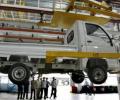
Rural commercial vehicle (CV) registrations have consistently outpaced urban sales from April to July 2026, driven by a significant diversification of the rural economy and the positive impact of GST-led consumption, according to experts and data from Fada.

NITI Aayog has recommended treating data centres as strategic infrastructure rather than mere investment projects, releasing a report titled 'Data Centre Evaluation Framework to Help States Plan for Sustainable Growth'. The report advocates for common standards, central government guidance, and a structured approach for states to manage data centre growth, considering resource requirements and economic benefits.
New Zealand Prime Minister Christopher Luxon stated that the historic Free Trade Agreement with India, now in effect, will help grow both economies, allowing Kiwi businesses to reach over a billion more customers with significantly reduced tariffs, leading to 'more jobs and higher wages for Kiwis'.

Former Chief Economic Adviser Krishnamurthy V Subramanian outlines India's strategy to become a USD 55 trillion economy by 2047. The plan hinges on leveraging its young demographic in AI, dominating sunrise sectors like space and defence tech, attracting FDI, and achieving sustained 8% GDP growth.

Following the death of veteran actor Nana Patekar, a Maharashtra village, Dhondalgaon, recalls how his NAAM Foundation funded a water conservation project ten years ago, transforming it from a drought-prone area to a 'tanker-free' and economically thriving community. The project, which involved desilting barrages, boosted agriculture and dairy farming, and eliminated farmer suicides.

India is developing a 'Gross Domestic Knowledge Product' (GDKP) to identify and define its knowledge assets, a move aimed at safeguarding them amidst global efforts to monetise and 'weaponise' knowledge, according to NITI Aayog member R Balasubramaniam.

Despite near gender parity in basic bank account ownership, women in India remain significantly underrepresented in the growing platform economy due to gaps in digital financial capability and access to credit, according to a joint report by the International Labour Organization and National Council of Applied Economic Research.

India's economy is projected to lose momentum in the second half of fiscal 2026-27, with tighter financial conditions, elevated energy prices, and broadening inflation pressures posing significant risks, according to DBS Bank economist Radhika Rao.
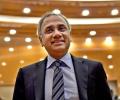
Infosys CEO Salil Parekh stated on Tuesday that the company's AI services, currently contributing over 8% of revenue, are growing rapidly and could account for almost half of its work within two to three years. He highlighted the strong demand for AI services, the company's hiring and training efforts for graduates in AI, and discussed potential risks like infrastructure challenges and societal backlash.

'In fact, when monetary policy has been deployed, it does not distinguish between types of shocks. It goes straight for the kill.'

India's Chief Economic Advisor V Anantha Nageswaran stated that the country's balance of payments (BoP) pressure is expected to remain a continuous challenge due to rising imports, commodity dependence, high global interest rates, and intense competition for capital.

'India is a large source of Spotify's future audience growth because it is the largest market in the world.'

'It is not because of the war in West Asia, which began on February 28.' 'Petroleum product prices are already going through the roof. They are bound to have a serious inflationary impact.' 'A country's leadership is tested in trying times. It is here that the current leadership is failing.'

Moody's Analytics predicts India will remain the fastest-growing major economy in 2026 and 2027, but its pace will moderate due to a global slowdown, geopolitical risks, and financial market volatility, despite the boost from AI demand.

Maharashtra Governor Jishnu Dev Varma has advocated for a bamboo-based economy to drive sustainable development, create rural livelihoods, and offer green alternatives to plastic. Speaking at a summit, he highlighted bamboo's crucial role in climate change mitigation, its potential to empower local communities, and its benefits for farmers.
Adani Enterprises and US-based Jabil have signed a non-binding agreement to establish a 50:50 joint venture in India. This JV will manufacture artificial intelligence and data centre equipment, including AI racks, servers, storage, networking gear, and cooling systems, targeting both Indian and global markets. The collaboration aims to capitalise on India's accelerating data centre demand and the surging global investment in AI compute infrastructure.

A joint report by Deloitte India and FICCI projects India's consumer economy to reach USD 1.9 trillion by 2030. This growth will be fuelled by rapid AI adoption, evolving consumer preferences, and new commerce models like e-commerce and quick commerce. India leads in AI adoption among top countries, with businesses leveraging it for engagement, innovation, and forecasting. The report also highlights the emergence of a new Indian consumer seeking convenience and transparency, and identifies key trends shaping FMCG, retail, and e-commerce sectors.
Industry leaders at MRAM Expo 2026 highlighted that India's maintenance economy has the potential to unlock a 1 per cent GDP opportunity. This growth can be achieved by addressing productivity losses from equipment breakdowns, unplanned downtime, and inefficient assets through smarter asset management practices. The NITI Aayog also supports AI-based predictive maintenance for resilient infrastructure, while the Indian Asset Performance Management market is projected for substantial growth by 2033.

'The remaining 30% are scared they will be shot at and they too will shell out the money soon.'

The United Arab Emirates (UAE) has expressed intent to invest an additional $25 billion in India, with an ultimate goal of reaching $100 billion in investments, Union Minister Piyush Goyal announced. This comes as both nations plan to enhance cooperation in shipping, ports, energy, and emerging technologies, against a backdrop of expanding bilateral trade.
Bharti Airtel Chairman Sunil Mittal has called for proactive regulation of Artificial Intelligence, stating that waiting for an "accident" before implementing safeguards would be "foolish." Speaking at the Bloomberg New Economy Forum 2026, Mittal highlighted the struggle of governments to keep pace with AI's rapid growth and emphasised the need for a global regulatory framework, similar to the aviation sector, to ensure national security and responsible development.
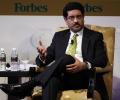
Aditya Birla Group Chairman Kumar Mangalam Birla stated on Tuesday that investments in artificial intelligence should be driven by potential returns, not by a "fear of missing out." Speaking at the 2026 Bloomberg New Economy Forum, Birla indicated that his group would adopt AI more gradually than previously planned, moving away from an "AI arms race" mentality. He also discussed the varied applications of AI across different business sectors, the challenges of capital allocation, and the impact of geopolitical events on global companies.

'We are open to all countries around the world as long as we get a fair deal, as long as we are ensured continuity in the engagement.'

'We are ready to help Prime Minister Modi achieve his vision of 100 per cent connectivity throughout India -- a vision all of our company, including Elon, shares,' Lauren Dreyer, vice-president of Starlink business operations at SpaceX, said at the pre-business day of the India Mobile Congress in New Delhi.

Moody's Ratings has sharply increased India's GDP growth forecast for fiscal 2026-27 to 7 per cent, making it the fastest among G20 economies, driven by economic resilience despite the Middle East conflict. However, the agency flagged significant inflation risks stemming from elevated oil prices and potential El Nino disruptions.

Union Minister Ashwini Vaishnaw warned of increased global turbulence from tech disruptions, AI, and financial risks in the coming years. He stated that India is strengthening its economic and technological resilience to protect its growth from external shocks. India is focusing on domestic manufacturing and design in critical tech areas while maintaining global integration, with trust becoming as crucial as cost in supply chains.

'Ultimately, banks are a channel for people to get some long-term return, and this means banks need to adjust their asset-liability mismatch.' 'Customers also need long-term deposits, say those of three-five years. How would they get them if returns on those deposits do not climb?' 'Otherwise, on fixed deposits, a senior citizen doesn't get anything.'

External Affairs Minister S Jaishankar stated that the stability of the Line of Actual Control (LAC) is essential for normalising India-China relations, asserting that border disturbances will have consequences. He connected trade and investment growth to border peace and highlighted significant economic issues, including a severe trade imbalance and lack of market access for India in China. Jaishankar also referenced the 2020 Galwan clashes as a critical turning point, underscoring the profound impact of border tranquillity on the overall bilateral relationship.

India's Next-Gen GST reforms are proving instrumental in driving robust economic growth, simplifying tax compliance, and fostering a more inclusive business environment across the nation, aligning with the vision of a 'Viksit Bharat', writes Finance Minister Nirmala Sitharaman.

'While the population remains relatively young, its age structure is beginning to shift, setting the stage for a much older population later this century.'

This article details the quarter-century journey of BRICS, from its inception as an economic acronym by a Goldman Sachs economist to its current status as an expanded eleven-member international bloc. It highlights its growth, key historical moments, and the significance of its upcoming summit, particularly with Iran's renewed importance in discussions.

'Indian IT firms must hire and train more Americans while reducing dependence on sending employees from India to the US.'

Union Minister Rajnath Singh has accused the Congress and its allies of attempting to instigate a 'Bangladesh-like regime change' in India, leveraging youth energy for political confrontation and anarchy, rather than constructive nation-building.

Dedicated Ayush dispensaries increased from 26,130 in 2013-2014 to 37,804 in 2024-2025, while hospitals rose much more slowly, from 3,605 to 3,885.

From his first summit appearance in Durban in 2013 to the bloc's landmark expansion and renewed diplomacy in recent years, Xi Jinping's speeches and initiatives have reflected China's evolving priorities within BRICS.

Prime Minister Narendra Modi has urged for a global framework to combat cross-border cyber frauds and deepfakes, highlighting the need for governments, tech companies, telecom operators, and financial institutions to collaborate. Speaking at the India Mobile Congress 2026, Modi stressed that technology thrives on trust and that India is ready to share its expertise in tackling cyber threats. He also noted the rapid expansion of 5G and the success of digital governance initiatives like Direct Benefit Transfer.
